
Britain's weak Navy is undermining its nuclear deterrent
By Logan Smith
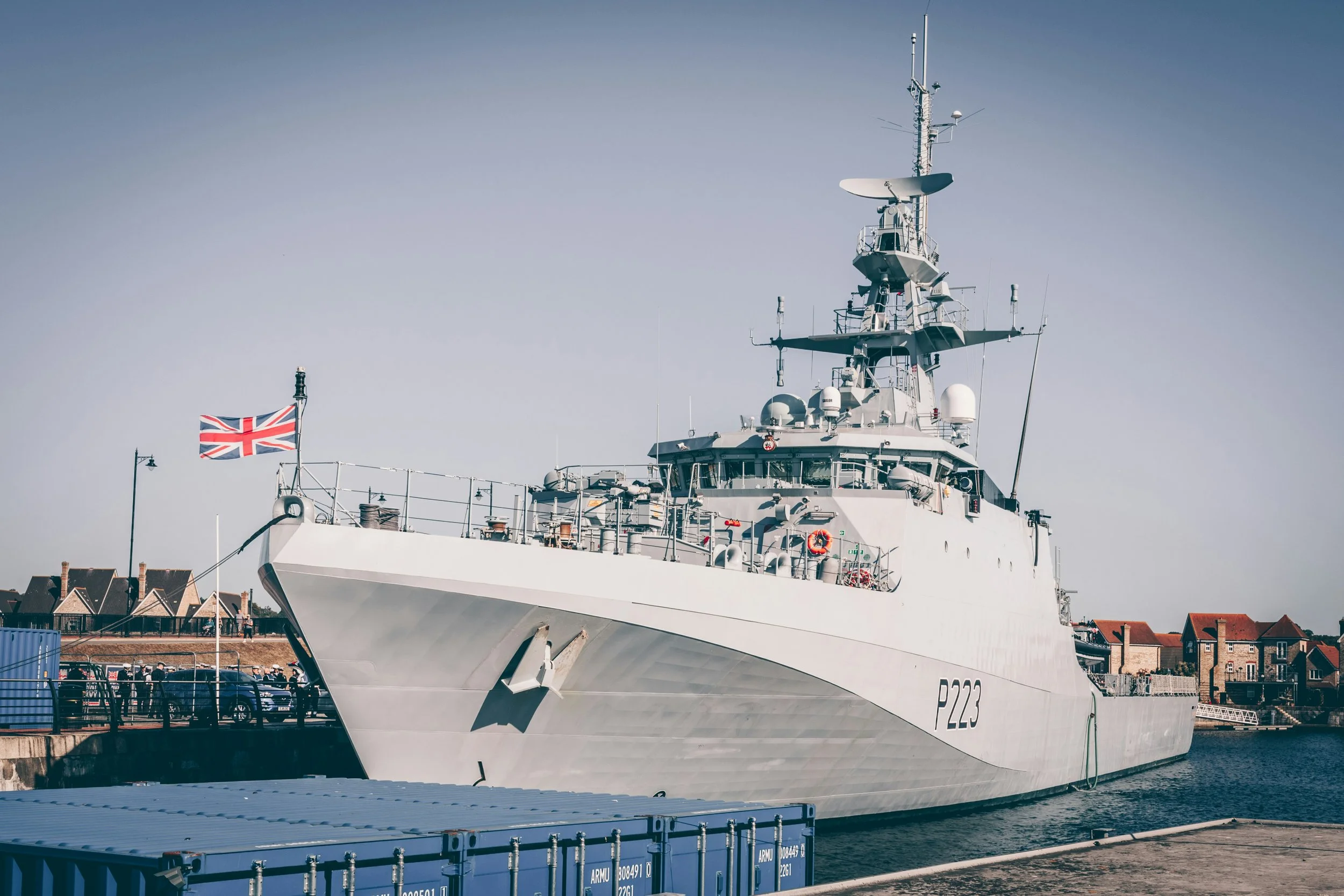
HMS Medway || image by Andy Holmes via Unsplash
It's no secret that the Royal Navy is a shadow of its former self.
Every year the force gets weaker, with the number of warships being decommissioned overtaking the number being built.
Official UK armed forces documents show that four frigates and two amphibious landing ships were decommissioned between April 2025 and 2026, lowering the total number of Royal Navy vessels to a measly 50 active surface ships, excluding submarines.
This is a monumental reduction in overall ship numbers, particularly when compared to the Navy's peak of around 1,400 vessels at the height of World War 2.
Underfunded, underutilised and shrinking, the British Navy is rapidly becoming one of the weakest branches of the UK military. This is happening at a crucial time when Russian naval activity around Britain has risen by over 30 per cent, further overstretching the small fleet.
Experts warn that the UK is not prepared for substantial disruption to its underwater cable networks, lacking the ability to fully defend them or react quickly. General Sir Gwyn Jenkins, the first sea lord, speaking to 'Defence Talks', said:
"My biggest concern is the uncertainty around the future. The rise of state-on-state contestation, not just competition.
"And a number of possible scenarios in the future that could lead to even catastrophic events, with no certainty that we can avoid them."
Experts are also worried that Britain's nuclear deterrent, Trident, could become unreliable as the Navy struggles to maintain it.
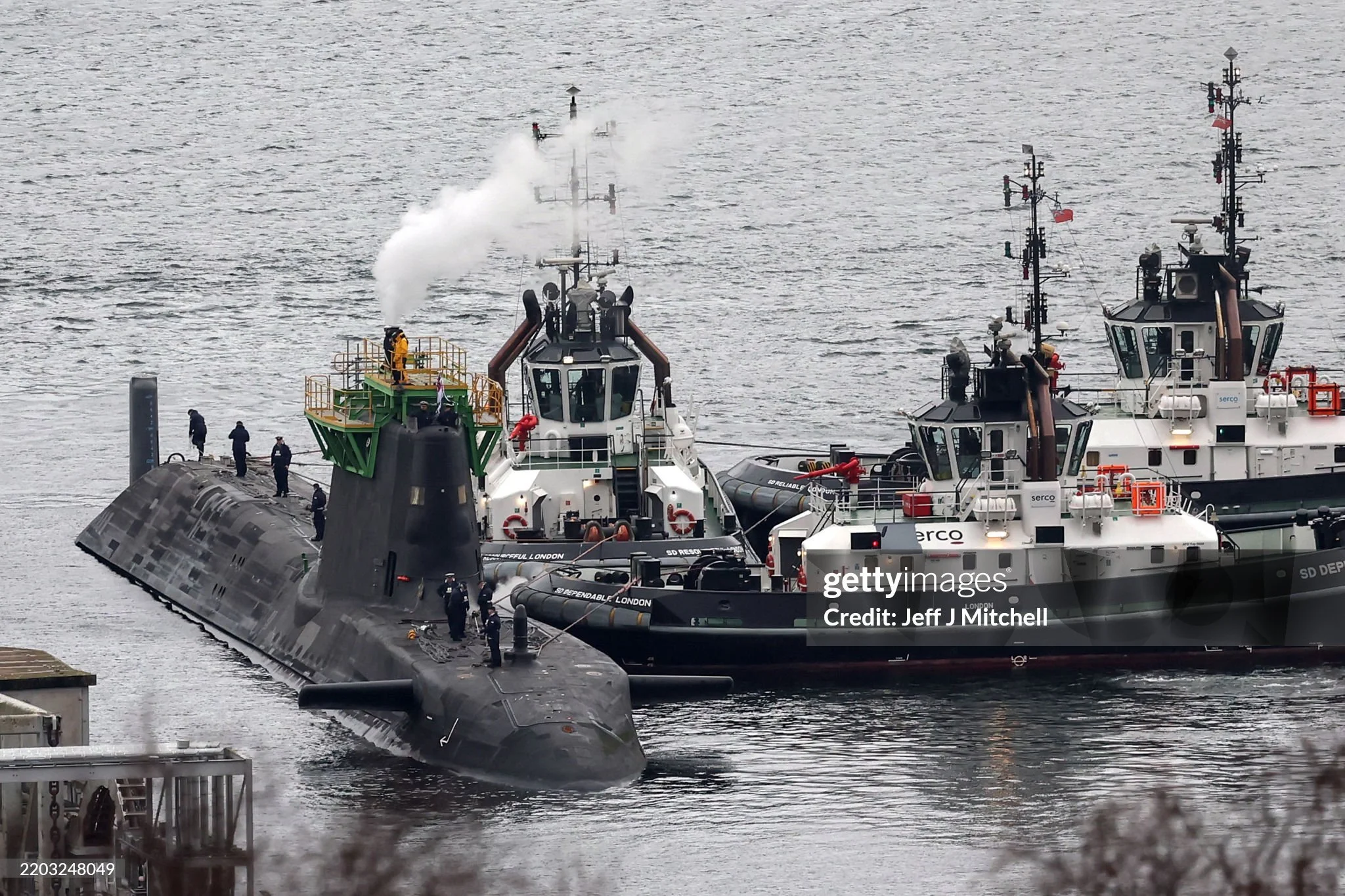
HMS Artful, an Astute-class nuclear-powered fleet submarine, is manoeuvred at His Majesty's Naval Base Clyde on March 04, 2025 || image by Jeff J Mitchell via Getty Images
In 2015, submarine HMS Vanguard was supposed to undergo a routine mechanical service, lasting three to four years. Instead, it took nearly seven and a half years, which was longer than the six years it originally took to build a submarine.
This week, HMS Vengeance returned to Scotland after a record-breaking 217-day-long service, the longest in British history. The 140-strong crew onboard had not seen the sun for months, with many described as pale and ghoulish.
This represents a growing problem for the Trident programme, the typical patrol length for the UK's Vanguard-class submarines has more than doubled in recent years, with six-month-long expeditions becoming routine due to a shortage of seaworthy vessels in the Royal Fleet.
The Royal Navy maintains a policy of having at least one nuclear-armed submarine on constant patrol while the others undergo repairs. The aim is to keep a continuous
nuclear deterrent always on alert and ready to respond, even if the rest of the world is destroyed.
The next few years will determine whether the Royal Navy receives more funding, but at the current rate, ship numbers are unlikely to improve, and as Trident systems age, their future seems uncertain.