
From Damsels to Dominance: the evolution of female characters in video games
By Jenny Beaumont
Female characters have been hyper-sexualised throughout video game media for decades, and only recently have evolved into real portrayals of women. In the 80s, it was common for female characters to be portrayed as objects to be rescued, such as Princess Peach in the Super Mario Bros. series and Princess Zelda in the Legend of Zelda Series. At the time these games were made, it seemed acceptable to portray female characters in a weaker light, and people accepted it as the norm. According to the cultivation theory, the audience’s perspective on reality is shaped by the media. This has drastically changed their opinions of women and their beauty over the years. In most video games, the media portrays ideal beauty. The cultivation theory shows how the ideal beauty is transmitted through video games and into the public eye. Mainstreaming influences have been discovered for expectations of the ideal female body, with big breasts, a small waist and an ideal hip size.
Lara Croft was created in 1996 by a team at British developer Core Design. She was the first female game protagonist. Lara Croft was introduced in Tomb Raider, made for PlayStation and Sega Saturn. The concept of the game is for Lara to venture into tombs and find ruins across the world. Core design says they chose strong female icons for Lara’s inspiration, including pop musician Neneh Cherry, who was cited as a key design influence. Another key influence for Lara was the comic character ‘Tank Girl’. Lara Croft was designed to counter female stereotypes. However, many gamers would disagree with this statement.
The 1996 game was noted as the original “Cyberbimbo,” as her design featured an exaggerated body shape, most notably her triangle breasts and tiny waist. Due to the sexual shape of Lara attracted many male players, the designers of Tomb Raider began to make Lara’s breasts bigger and bigger. This, paired with her small waist, made it an impossible body type. Over time, Lara’s design had become more realistic and less exaggerated. In 2013, Lara would abandon her original figure, with its exaggerated breasts, and her short shorts were replaced with trousers. However, many players couldn’t accept the new breast replacement on Lara. This new Lara shook the gaming world; within 48 hours of release, it had sold more than one million copies in the UK.
Lara is an iconic character in video game history. The reboot of Lara gave her depth and more personality; she was more relatable and brought growth to the storytelling. This attracted a new fan base, as people could relate to Lara's vulnerability. Although some classic fans thought the newer games took away the “badass” Lara, they portrayed her as weak. Even if the old Lara Croft design is monumental, it shows that women were extremely sexualised, and then when they show growth and vulnerability, they are called weak.
Nick Lewis, a senior lecturer in Illustration and Animation games art, said: “I think the depiction of female characters in games is similar to how social media portrays the female form. I think, in terms of it being unrealistic, there are two issues. One, it sets a certain standard of presentation that young men playing the game might expect of women. And for women, it implies how they should present themselves. Also, depending on the game, it depends on who plays it, as it doesn’t really represent the players themselves. Online games have a higher female player rate, but there is a higher percentage of male developers than female.
“You can see growth with the deprecation of Lara Croft; you can see the demonstrations of the previous characters lined up from the 1990s until now. So, I think there’s some progression in character design. But I still think there are a lot of the same issues, in a way, when it comes to representation. If you look back at Mortal Kombat and in terms of the endings for Mortal Kombat a few years ago, there are a number of things I don’t think would be acceptable now, in terms of violence against women. But then again, there are two things probably on the horizon: game development is much more open, and people can make games much more easily than they used to. So, if you’ve got this so-called manosphere influence over game development, and maybe that could be somewhere where it might go backwards in terms of people making what they want to make.
“When I encounter stereotypical portrayals of women, I don’t think it’s very imaginative, and I think that’s it in a practical sense. I think in terms of how it means you don’t necessarily get a multifaceted character. So, there’s no room to say that this person has a personality beyond the way that they look. If you look at manga and anime, they all have the same face and body type, which is very stylised and doesn’t vary much. I think in some ways it lacks imagination; everyone’s imagination is different, and if we standardise the way that people look, we lose out on good characters.”
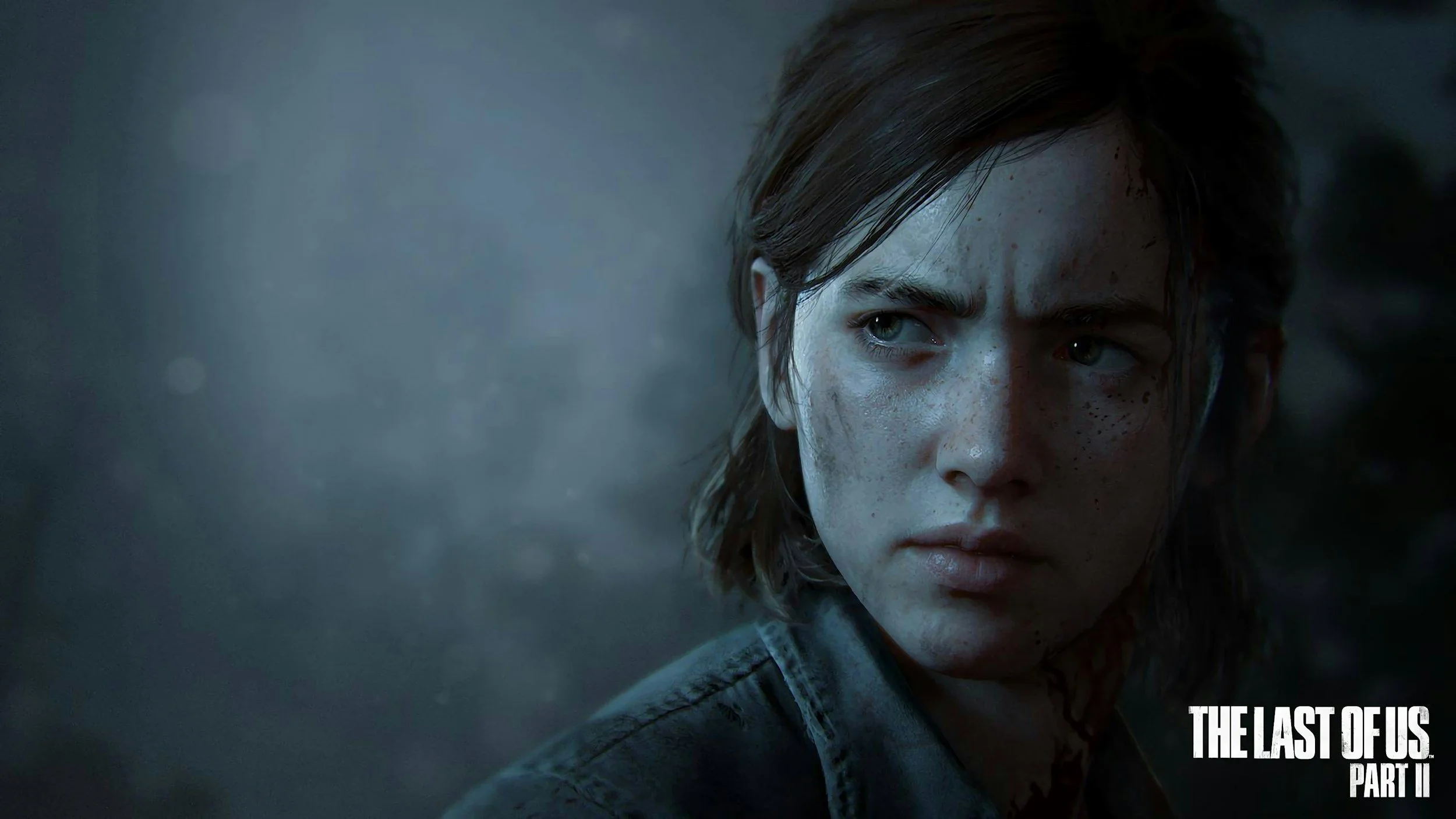
Ellie The Last of Us
Queer women are unrepresented in video games due to historical marginalisation, a male-dominated field, and industry-wide trends that prioritise heterosexual narratives. A report from GLAAD estimates that 2% of video games feature queer characters or storylines. And around 48% of queer players feel more represented in indie games rather than mainstream titles, 29% of queer players say that the industry doesn’t think about them in any capacity.
Because of this, LGBTQ+ representation is rarely seen, and when it is, it’s stereotyped. Gamers can use role-playing to achieve queer representation in video games. Lesbian characters can appear, although they often are used for the “male gaze” and not created for actual representation. Many mainstream games avoid featuring queer characters to appeal to a broader fan base.
The Last of Us (TLoU), developed by Naughty Dog in 2013, follows survivors Ellie and Joel as they navigate the zombie apocalypse after traumatic events. Ellie is the main protagonist, and we follow her throughout the games.
Why Ellie is such a good female character is that she’s raw and real. Ellie starts as a troubled teenager throughout the first game, and in the second game, we see Ellie become a mature adult. Ellie is not the traditional hero protagonist; she can be selfish and violent. But because of her past trauma, the player understands why Ellie makes the choices she does. Elie is obviously flawed, as all humans are, and this is what makes her such a good depiction. The writers did not prioritise making her “likeable” in TLoU part two; instead, they focused on portraying revenge. This often makes her actions difficult, which challenges the player.
Ellie is a queer woman featured in the Left Behind DLC for the game, where she has romantic relationships with two women. The creators of TLoU handle her and other queer characters with care, making her sexual orientation part of her character development.
Due to the making of queer characters, Naughty Dog received backlash with “gay agenda”, and upon the release of part two, they were heavily review-bombed, with a lot of the backlash being about the inclusion of queer characters.
I asked GamesFQA for their opinions on female characters. One gamer said, “Female characters are typically referenced as elements of culture war. If a certain type of gamer doesn’t find a character attractive, they’re ugly and are nothing but an attempt by the woke crowd to force their agenda upon us all. If they do find a character attractive, they must celebrate the character as a victory against the woke agenda, who are surely seething at the presence of anything remotely sexual. It makes it hard to discuss the actual evolution of female characters. Unfortunately, they don’t have enough presence in the media. And while there’s plenty of useful discussion if you dig deep enough, we won’t get much of it in casual gamer discussion because people are too busy acting like sexual attraction is the most important debate in modern culture.”
Another gamer saying: “Overall, I think video games used to be considered only for losers or nerds by females in particular. But, since video games have now eclipsed movies and music in terms of industry size being larger than movies, music, and television combined I think it’s safe to say the prior mentioned dismissive attitude has fallen by the wayside or to be proven wrong thankfully.
“Males were the early adopters, so to speak. So, with that said, I think it's cool that females have embraced video games and see the value in the medium as a form of entertainment and social engagement, as 40% of players are female these days. As far as how they’ve been represented in video games, I think it’s a mixed bag, but lately it's veered towards some regrettable extremes, which is to be expected. Given that young professionals who work on video games are receiving their training in a highly politicised, ideological environment (Western Universities), the culture is bleeding into video games in some obvious ways.”
Women will continue to be sexualized in games, and there’s not much gamers can do other than show their concern. We live in a very judgmental world, and women will always be in the middle of it. Media and vice versa shape video games. The stereotypes of women can be extremely harmful and cause mental health issues in young women. But we have seen an improvement in recent years with characters such as Ellie from TLOU, Aloy from the Horizon series, and Heather Maon from Silent Hill 3. These characters are helping make a change in female characters. Many indie games will give a great representation of females; it’s the AAA games that tend to sexualize females overly. Female and male gamers are sick of the sexualisation of female characters, with a report from the Guardian showing that about 1,400 youths, 47% of middle-school boys and 61% of high school boys agreed that women are treated as sex objects too often in games. Gamers can hope that AAA games will learn that we no longer want sexualised women in our video games.