
Choose Life, Choose Legacy: How Trainspotting reshaped Scottish identity and reverberated through Scottish urban subculture

Train in motion {Unsplash images}
By Ellie MacPhee
On Monday, Trainspotting turns 30, and its opening moments still hit like a cultural detonator. A sprint through Edinburgh’s streets. A dive into club toilets. A voice demanding “choose life”. From the moment it burst onto screens in 1996, Trainspotting didn't ease audiences in. It lunged at them.
Directed by Danny Boyle and adapted from Irvine Welsh’s 1993 novel, the film tore down the tartan-romantic image often associated with Scotland. There were no misty Highlands here. No sentimental myths. Instead, its Edinburgh is raw, urban, bruised by unemployment, addiction, and the fallout from post-industrial decline.
Crucially, Trainspotting spoke in the cadences of working-class Scotland. Thick dialect was not softened for English or international ears. This was intentional. The film refused cultural transition, asserting a version of Scottishness rooted in lived experience rather than stereotype.
That assertion mattered. Scottish identity in the 1990s was often framed by nostalgia, tradition, and romantic imagery. Trainspotting offered something different: a present tense, gritty, unvarnished portrait of a generation struggling with limited opportunity and fractured hopes. It wasn't pretty. It was real.
Though unmistakeably Scottish, the film’s impact quickly spread beyond national borders. It arrived as the scene in Britain was being reimagined as bold, creative, and confidently rebellious. Against the backdrop of Britpop, burgeoning club scenes, and the optimism of Cool Britannia, Trainspotting offered a darker counter-narrative. For every swaggering anthem of national cool, the film exposed the alienation and decay lurking beneath.
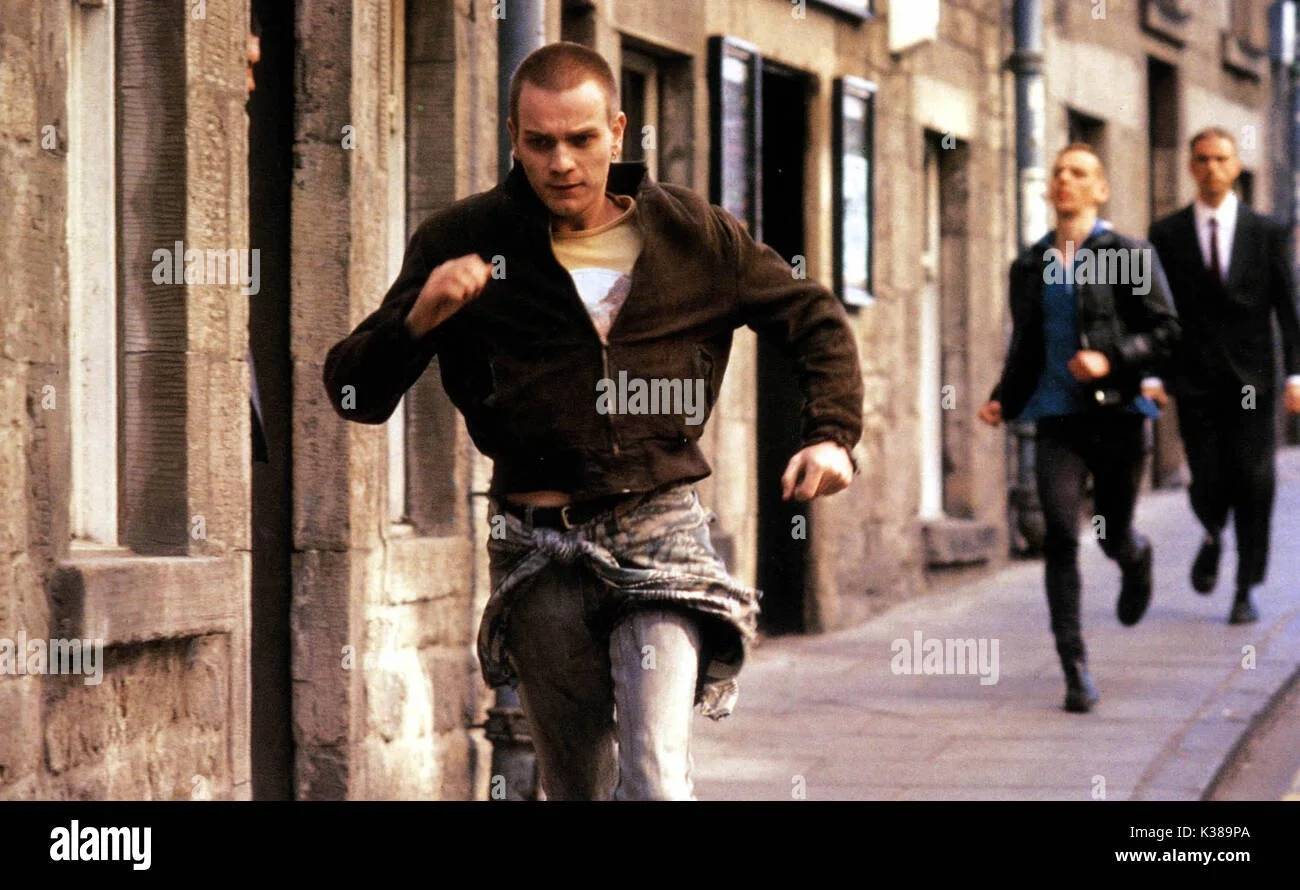
A scene from Trainspotting [Alamy Images]
Its influence seeped into every corner of culture. The soundtrack became definitive. The visuals - kinetic, edgy, unpolished - rewired cinematic language for a generation. Quotable lines became street currency. Fashion and music absorbed its attitude. The film’s antiheroes, rebels without a clear cause, reflected a generation finding its identity in a landscape of shrinking opportunities.
On its 30th anniversary, the cultural importance of Trainspotting feels as potent as ever. It didn’t just reshape Scottish identity on screen, it challenged the young people across Britain to confront the gap between image and reality. Its legacy isn't nostalgia. It’s influence. On film, on young people, on pop culture, and on the way we talk about where we come from and who we become.
Three decades later, Trainspotting still feels uncomfortably current, not because it aged well, but because society hasn’t.