
Are people being diagnosed too much or too little?
By Louis Findlay

Waiting lists for ADHD and Autism assessments sky rocketing (Image: Unsplash)
Wes Streeting, Secretary of State for Health, is directing a review into the growing demand for neurodivergent and mental health services in England. The review will analyse evidence to discover if there is overdiagnosis and if so, what gaps are in the support.
Growing up surrounded by family with Autism and Attention Deficit Hyperactive Disorder (ADHD), I would argue against the review. It took quite a while for certain members of my family to be diagnosed and even so all of them came back positive. A review on the growing demand for diagnosis is quite dismissive of the fact that a lot of people are neurodivergent.
As someone who is personally neurodivergent, being diagnosed for ADHD helped me understand my strengths and weakness to then utilise them in my favour.
It is inevitable that there will be people on waiting lists that aren't neurodivergent or need help, but that can be managed by putting more funding into the entire system. Everyone will want to know if they have anything affecting them or if they have any illnesses, they could get support for.
I feel like the entire project should get drastically more funding, as with some conditions such as ADHD or high functioning autism, it becomes hard to tell where the line is crossed between neurotypical and neurodivergent. .
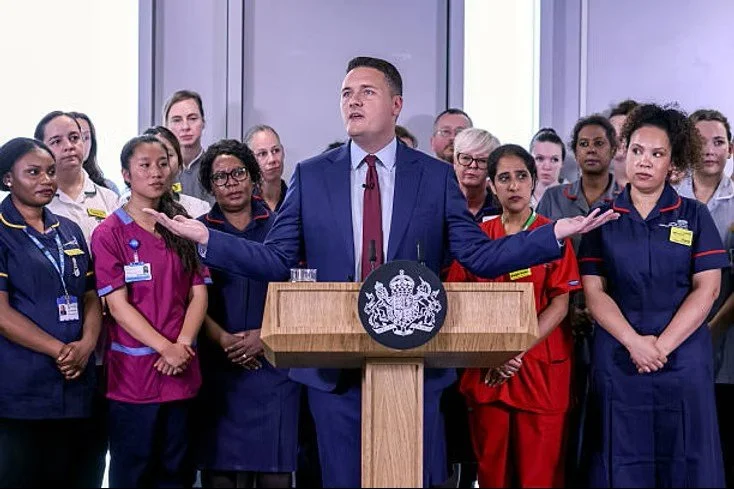
Wes Streeting, Cabinet Secretary of Health and Social Care (Image: Getty Images)
This review will not only affect the people in the systems but also organisations and charities.
Mel Merritt, Head of Policy and Campaigns at the National Autistic Society, said: “We welcome work to address the long waits and barriers to support autistic people face.”
This statement further emphasises that there is nowhere near enough support for neurodivergent people and they are highly misrepresented and misunderstood.
One improvement that could be introduced into the education system is the implementation of a dedicated section within mandatory classes, such as PSE. These lessons already cover important topics like sexual health, but the curriculum could be broadened to include comprehensive education on neurodivergent disorders. Providing this information early on would not only raise awareness but also help reduce stigma and ensure students feel supported and understood.
There are very few characters in mainstream media who are openly portrayed as neurodivergent. One well-known example is Sheldon Cooper from The Big Bang Theory, who displays traits commonly associated with conditions such as autism or OCD, even though the show never labels him directly. While he provides some level of representation, characters such as Sheldon are still rare, and their portrayals can sometimes be exaggerated or stereotypical.
Increasing the number of well-written, realistic neurodivergent characters would be highly beneficial. It would help normalise and allow neurodivergent audiences to see themselves reflected positively on screen and improve wider public understanding of different neurological conditions.