
Government Fails to Tackle Transport Emissions
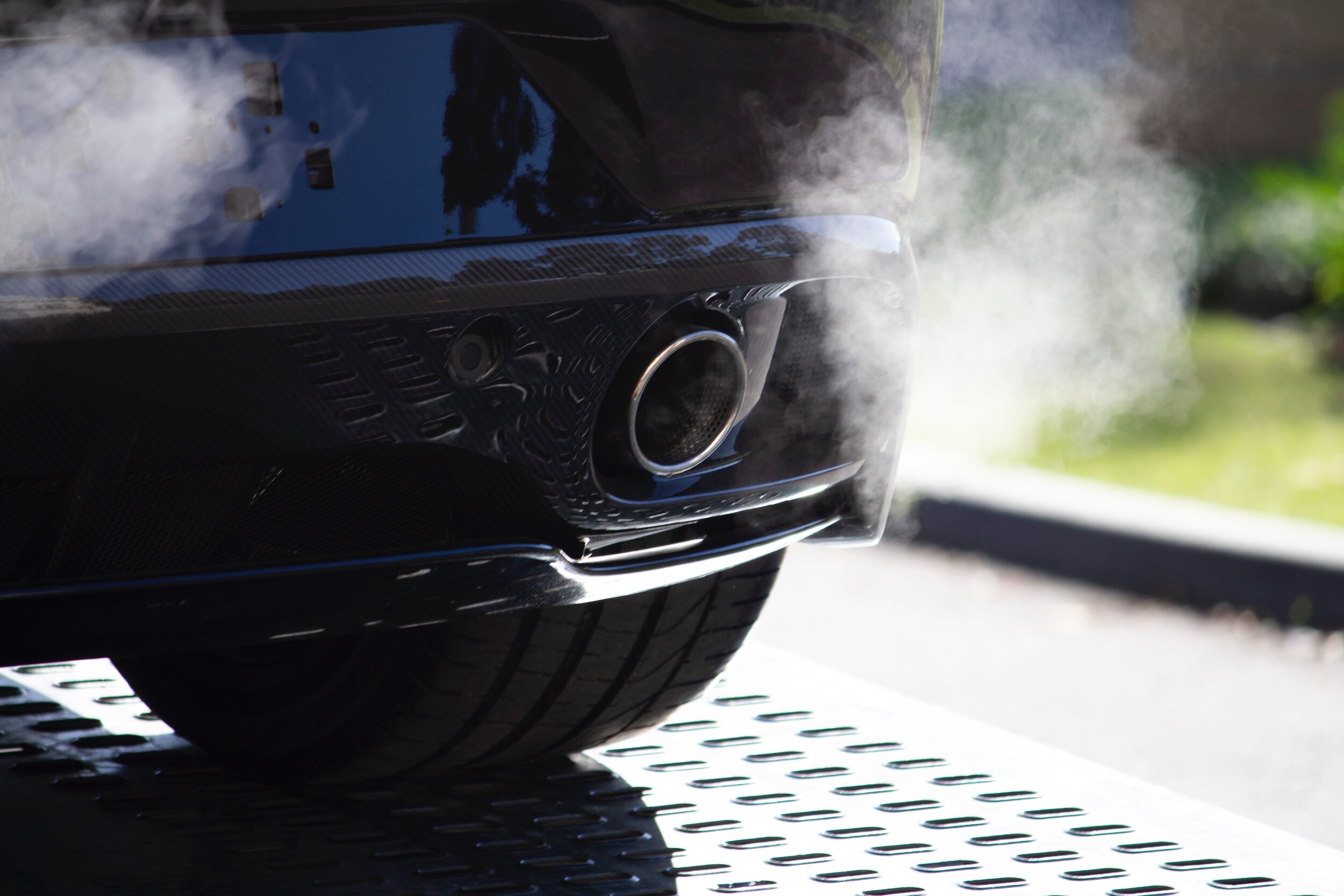
Transport is a leading cause of CO2 emissions. Photo by Matt Boitor on Unsplash
Glasgow will be the host of COP26, the United Nations Climate Change conference. This is where world leaders and climate change researchers come together to discuss a plan to tackle climate change and put a stop to the losing battle against global warming.
The biggest cause of global warming is greenhouse gas emissions released into the earth’s atmosphere; carbon dioxide is the primary greenhouse gas emitted through human activities. With this being said, in the UK government’s 2021 transport and environment statistics report, it stated that domestic transport was the largest emitting sector of greenhouse gas emissions, producing 27% of the UK’s total emissions in 2019.
Clearly, petrol vehicles make a substantial damage on the environment – but what is the government’s solution to petrol vehicles on the road? Electric vehicles are much eco-friendlier and more efficient on the road they also don’t require petrol so drivers do not need worry about rising fuel prices. The problem is, currently electric vehicles are still expensive and not everyone can afford one.
To combat this, the government has introduced a scheme where citizens can get a discount on the price of new low-emission vehicles through a government grant. However, the maximum grant is £2500, which means the electric vehicles will still be out of the range for many drivers compared to cheaper second-hand petrol vehicles. This can be a decisive factor to car buyers. According to NextGreenCar, there were more than 175,000 new electric vehicle drivers registered in 2020 –a 66% increase from 2019.
There has also been a reduction in the sales of petrol cars according to The Bellona Foundation (an independent non-profit organisation that aims to meet and fight the climate challenges, by identifying and implementing sustainable environmental solutions), which reports petrol vehicles have seen a decline by 37% between 2017 and 2020. Further reporting that cars relying on combustion engines lost more than 5 million sales last year. Is this the start of the electrical vehicle era?
The government has also introduced the 2030 petrol car ban. This doesn’t mean petrol cars are banned on the road, however new petrol cars will be banned. This means drivers can still drive their petrol cars manufactured before 2030. Many activists still say this is not enough, and the government is failing in their responsibility to tackle climate change.
Fraser Stewart, an applied researcher at the University of Strathclyde and an active voice against climate change agreed that the government was not doing enough to tackle transport emissions in the world’s fight against climate change.
He said: “Right now, nowhere near enough work is happening. We know that in Scotland alone transport is about 51% of our energy-based emissions. Where we do have a little bit of development in terms of infrastructure is electrical vehicles, which are becoming a little bit cheaper, but are still not affordable.
“However, we’re still pumping loads of money into building new roads for old cars, so we’re doing a little bit of work on one hand, but we’re building new roads and not meeting needs with trains, buses and trams. We’re not replacing enough of the transport we already have. So, no, we’re not doing nearly enough.”
Greta Thunberg, the teenage Swedish environmental activist echoed this when she claimed that she did not regard Scotland a world leader on climate change. She said countries were not coming close to what is needed in terms of fighting the battle against climate change.
In less than a months’ time, the spotlight will be turned to Glasgow, at COP26. There will be plans made in order to take control of the climate crisis, but as of now, statistics show that the government is failing in the fight to lower transport emissions in the battle against climate change.