
How the ‘Super Jumbo’ flew into the skies
By Nathan Devlin
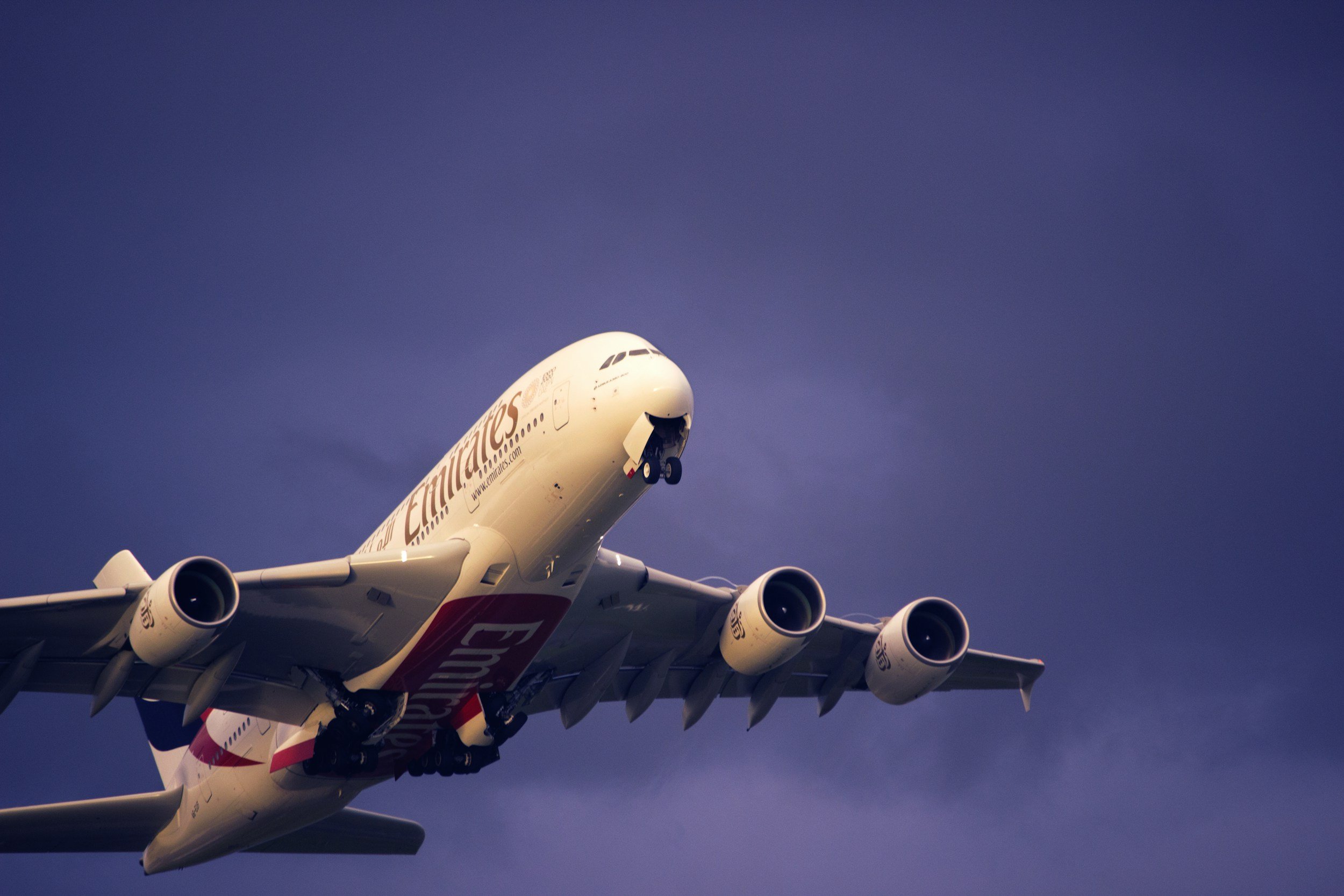
Image by @michaelrausch via Unsplash
For many years the aviation industry has sought to keep up with growing passenger numbers with larger aircraft. The Airbus A380 project was a response to this demand.
After the supersonic Concorde was retired at the end of 2003, and the price of running the ‘Jumbo’ 747 was rising by the day, there wasn’t many aircraft that could serve the demand.
Airbus set out to solve this problem by addressing current and future market demands. Their solution? A double decker plane.
Airbus recognised that by addressing the issue, they would not only solve the issues of today but the ones of tomorrow as well. Their aim was to redefine air travel by carrying more passengers than ever before.
When demand was at its highest for air travel, airports and runways were becoming congested, so maximising available space was key. Airbus saw the A380 project as a way to boost capacity and revolutionise long haul travel.
Like any design concept, the A380 was ambitious. They were trying to get a plane airborne with more than 1 deck, something that hadn’t been achieved before.
The initial stages of development included Airbus working closely with other airlines. They began to gather research on preferred on-board seating and facility arrangements. This research was pivotal in the design process for the Airbus A380.
The aerodynamics that were designed for the A380 featured a new wing design that reduced drag and increased lift. Winglets improved fuel efficiency and decreased vortex drag. Airbus created fly-by-wire technology that optimised control during flight. The A380’s design allowed it to have the largest wingspan of any aircraft, at 261ft or 79.8 metres.
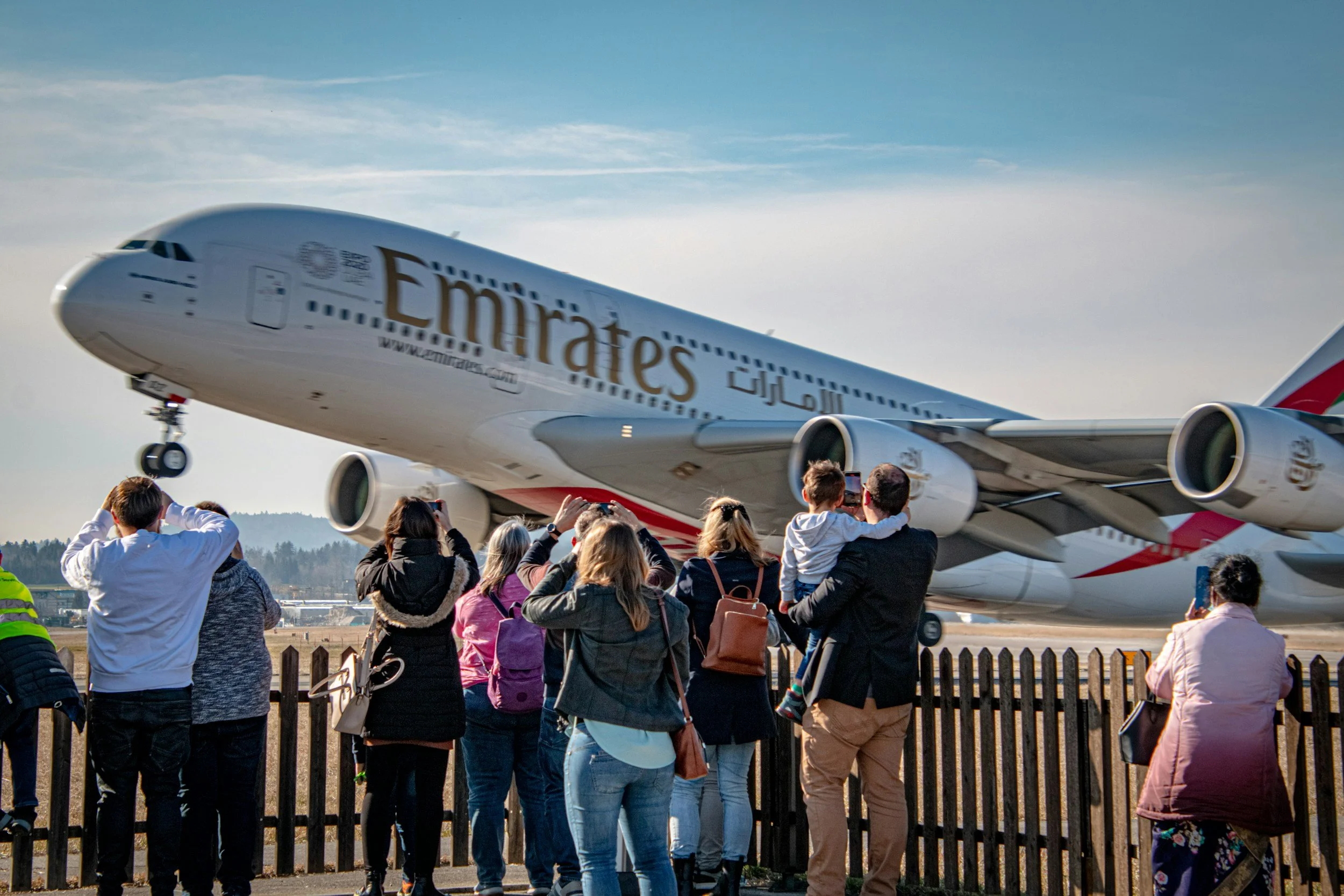
Image by @photosimon via Unsplash
After the design stage, the A380’s materials were chosen, which was a critical phase in the plane's development. Carbon fibre-reinforced polymer was chosen as it allowed the aircraft to be lighter, reducing weight therefore improving performance. In addition to this, an advanced production process made sure the A380 stood out among competitors.
The engine was next; the Rolls Royce Trent 900. Designed for maximum efficiency and thrust, the engines were ideal for long haul flights. They were designed to minimise carbon emissions, furthering their efficiency. The total development cost for the A380 was £16 billion.
The production of the airbus A380 was complex, with parts made in France, Germany, Spain and the UK.
In 2005 five A380’s were built for testing and demonstration. The A380 took off on its first test flight in April 2005. In December of 2005 the aircraft achieved its designed top speed of Mach 0.96. Aircraft must pass a variety of tests before they are certified to carry passengers. The A380 had to pass the high altitude, long haul and cold weather tests, which it achieved and was certified on March 29th, 2006. The Airbus was allowed to carry up to 853 passengers.
The first delivery was planned for the summer of 2006 but would be delayed by six months. In June of 2006 Airbus announced a second delay, alongside a cut in production. This resulted in only 9 aircraft being market ready by 2007.
This caused the share price to drop 26% for Airbus’s parent company EADS. The first delivery was completed on October 15th, 2007.
Fast forward 19 years and ten airlines still operate the Airbus A380, with the largest company being Emirates operating 100 of the 189 aircraft still flying today. British Airways, Qatar Airways and Lufthansa operatethe remaining 89.
Global Airlines, a new company and operator of the A380, has stated that they will be flying from Glasgow to New York using the famed Airbus. They completed their first flight with an A380 in 2025. Global is the first new A380 owner in over eight years.
The Airbus A380 continues to thrive twenty years after its launch. Despite chatter it might end up in the graveyard like the 747 or the Concorde, the A380 isn’t going anywhere. Airbus continues to promise that they will keep the iconic aircraft in the air.