
Red Card Recovery: Why Periods May Side-line Players Longer
Image by Reproductive Health Supplies Coalition via Unsplash
By Ellie MacPhee
Recent research is reshaping how elite sport understands female physiology, especially the link between the menstrual cycle phase and injury severity.
Recent research is reshaping how elite sports officials understand female physiology, especially the link between the menstrual cycle phase and injury severity.
A four-season study of female football superstars that play for FC Barcelona Femení tracked 852 menstrual cycles and 80 injuries among 33 athletes. The findings showed that injuries were not significantly more frequent during menstrual bleeding, occurring at roughly 5.46 per 1000 hours during menstruation vs 6.60 per 1000 hours at other times, with a probability of 0.55.
However, while injury incidence didn’t spike, the severity did. Injuries sustained during menstrual bleeding resulted in a much higher injury burden, about 684 days lost per 1000 hours compared to 206 days outside bleeding phases, with a probability of 0.0027, indicating longer recovery times and more serious consequences.
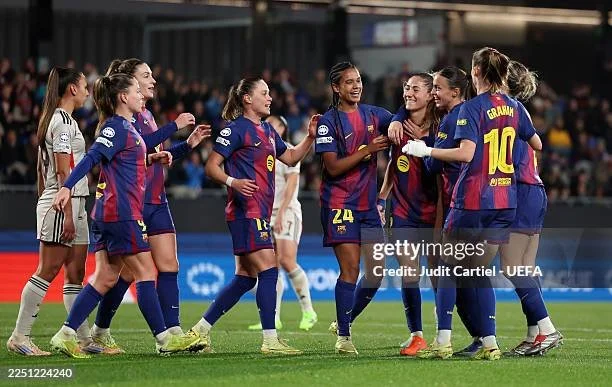
FC Barcelona Femeni vs SL Benfica in the UWCL in Dec 2025 via Getty Images
As lead author Dr. Eva Ferrer, a sports medicine specialist involved in the research, explained:
“Hormonal levels may not cause the injury, but they may influence how severe the injury becomes and how long recovery takes.”
This reflects commentary in The Scientist, which highlights that hormonal fluctuations, particularly low estrogen levels during menstruation, may compromise muscle repair and neuromuscular control, potentially slow healing and increasing fatigue or pain.
Supporting the football study, research involving 228 elite Spanish basketball players found that most had regular cycles (78.5%) but an overwhelming 86.8% experienced dysmenorrhea, painful periods, often caused by high prostaglandin levels or underlying pelvic conditions like endometriosis or fibroids, and 77.6% reported premenstrual symptoms like fatigue, all symptoms that can influence performance, training and recovery.
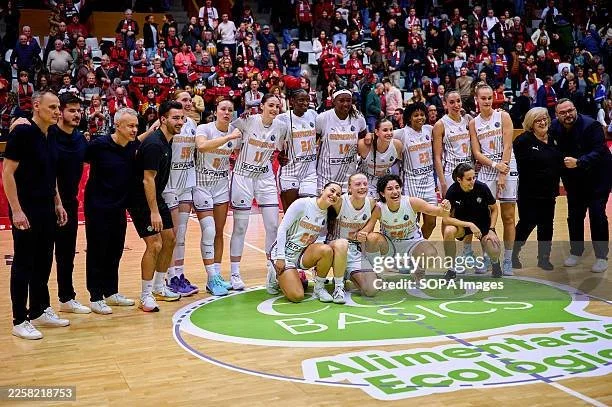
Spar Girona basketball team pose for a photo January 2026 via Getty Images
Only around ¼ used hormonal contraceptives, which can stabilise cycles, but are not universally adopted among athletes.
Collectively, these studies suggest menstrual health isn’t just a background condition, it’s an integral part of athletic monitoring. While periods don’t seem to cause more injuries, they may affect how injuries unfold and recover. This has practical implications: monitoring menstrual phases could help trainers adjust workloads, warm-ups, and recovery protocols to better support female athletes.