
When the Bible is on the ballot: James Talarico and the freedom of the faith-based vote
By Melissa McNaught

James Talarico gives victory speech after historic win || image by Brandon Bell via Getty Images
James Talarico’s historic victory in the 2026 US Senate race has painted Texas blue for the first time since 1988.
With this shift, Talarico has conclusively proven that religious reasoning within politics is no longer a tool exclusive to the right wing.
A loud and proud Democrat, Talarico has effectively “flipped the tables” within Texan ballot boxes. By giving Texas’s religious population the opportunity to vote left without it feeling like a betrayal, he has rebalanced the scales of voter freedom within religious communities.
For decades, America’s hyper-religious South has been in a Republican chokehold. Major right-wing spokespeople such as Charlie Kirk have been going viral for years, using Bible beatdowns to justify increasingly invasive legislation.

This meant that for many, a right-wing vote began feeling synonymous with a Biblical vote. And when Jesus becomes the face of real-world political change, the lines between personal voter freedom and religious cultural obligation begin to blur.
In 2021, Talarico went viral on the floor of the Texas House of Representatives when he said: “God is both masculine and feminine and everything in between. God is non-binary.”
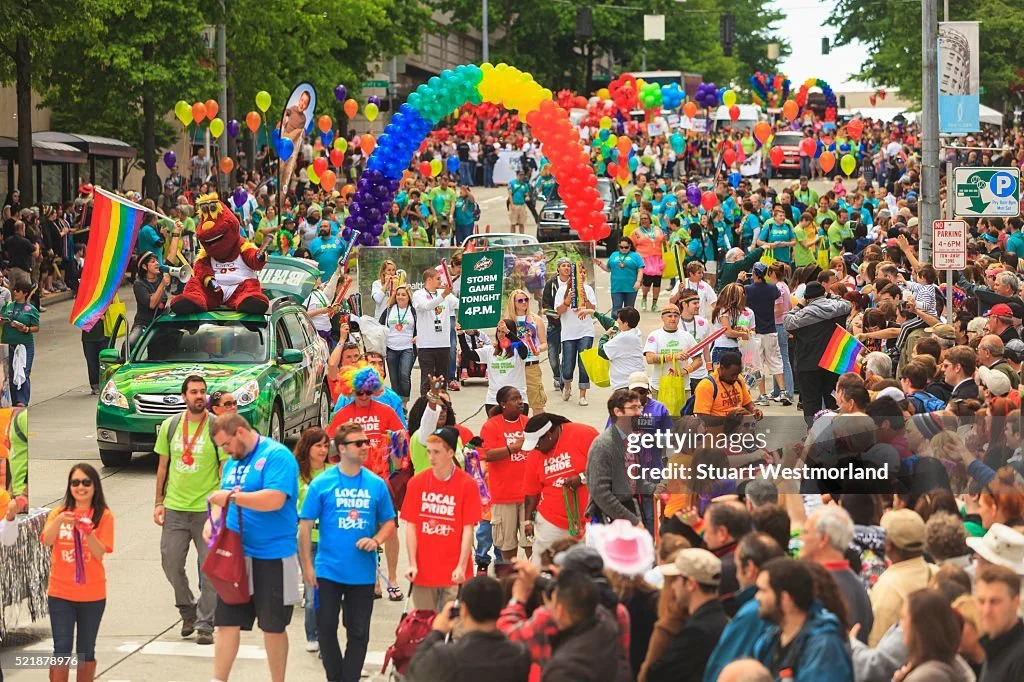
This claim was used in opposition to a Republican backed bill designed to ban transgender schoolchildren from playing on gendered sports teams. It marked one of the first times a faith-based argument was used in major politics to argue for queer youth rather than against them.
Pride Parade || image by Stuart Westmorland via Getty Images
During Talarico’s most recent campaign for Texas senator, this five-year-old statement became the centrepiece of his right-wing opposition’s smear campaign against him. Because Talarico’s political success was so deeply rooted in his devout faith, his opposition funnelled millions of dollars into discrediting his biblical beliefs.
It is the extreme reaction and panic shown by conservative politicians when Democrats utilise the Bible to propel liberal ideals that proves the significance of the religious vote.
Following his 2021 virality, Talarico continued using his Biblical pragmatism to campaign for queer and immigrant rights as well as to advocate for improved social welfare.
However, we must acknowledge that while Talarico’s faith-based campaign for the left has given back voter choice to the staunchly religious, it is ultimately the byproduct of America's ongoing theological arms race.
Talarico only needed to lean so heavily into his Presbyterian seminary background to counter the decades-long religious monopoly held by the right wing over Texas voters.
This is final stage of faith-based politics, and it threatens true democracy by oversimplifying nuanced issues. Democracy should be a peaceful collaboration between all parties and should allow for different perspectives and compromise.
By bringing religion into politics, allegiance becomes a question of good and evil, the faithful versus the faithless.
It turns a personal vote into an exemplar of faith, bringing unique pressure to those in hyper religious communities such as are prevalent in Texas.
Ultimately Talarico’s win has given those with strict religious loyalties a different option at the ballot box. But it has subsequently set a worrying precedent for the future of democracy and Democratic politics.