
Dubai chocolate and Dot cakes – has food consumption on social media gone too far?
By Niamh Kidd
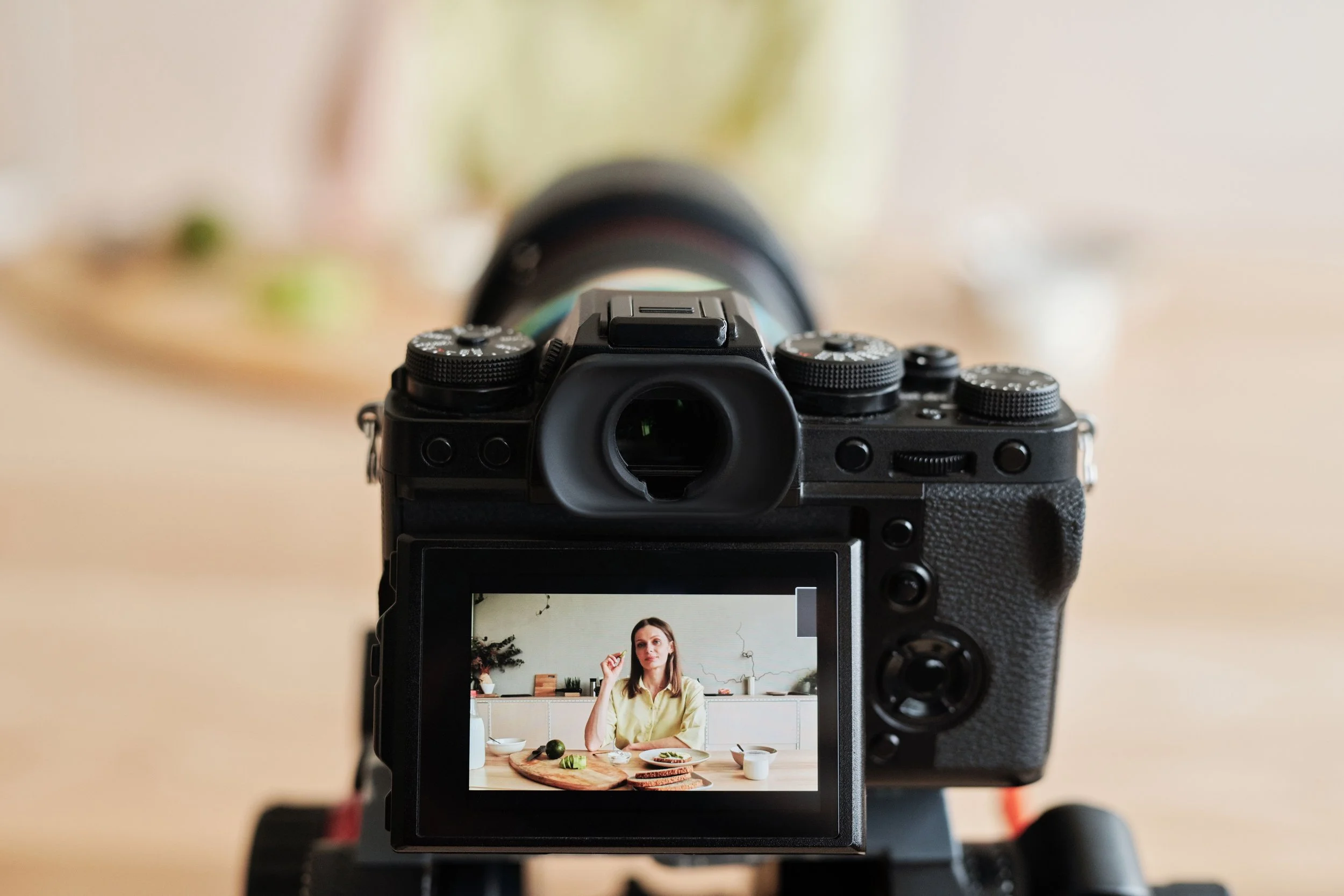
Woman eating in front of a camera in a kitchen- Pexel.com
Social media plays a vital role in our day to day lives. TikTok is the most popular app, and food and drink content is a big part of it.
Food trends have been a big thing on TikTok since April 2020. If you had the app around that time, you’d remember whipped coffee, baked feta pasta, and cloud bread.
Food trends this year, however, have gone too far.
For example, a recent craze appeared called “deconstructed latte”. The name explains itself. It’s a latte that comes deconstructed, with ice in one cup, milk in another, and coffee in a third. Some of the coffees even come with syrups and sprinkles, using even more cups. These coffees can range from $10 to $40. This trend is ridiculously wasteful, as the lattes can use four to five individual plastic cups, instead of just one.
The deconstructed latte, which people originally thought was going to be a funny joke and end in a week, has now become a menu item in cafes globally, which causes more unnecessary plastic waste. Influencers convince people to waste their hard-earned money on these microtrends, brainwashing their viewers.
In recent years, the trend of mukbang's has come back, but to an extreme level. Content creators would spend hundreds of dollars on food and pretend to eat it all. Behind the scenes, the food would be spat out and wasted.
Globally, 1.5 billion tonnes of food are wasted per year, which is equivalent to 19% of food available to consumers, according to foodhygienecertificate.co.uk.
All and all, the overwhelming propaganda in the food content industry is damaging not only the environment but also costing more money.
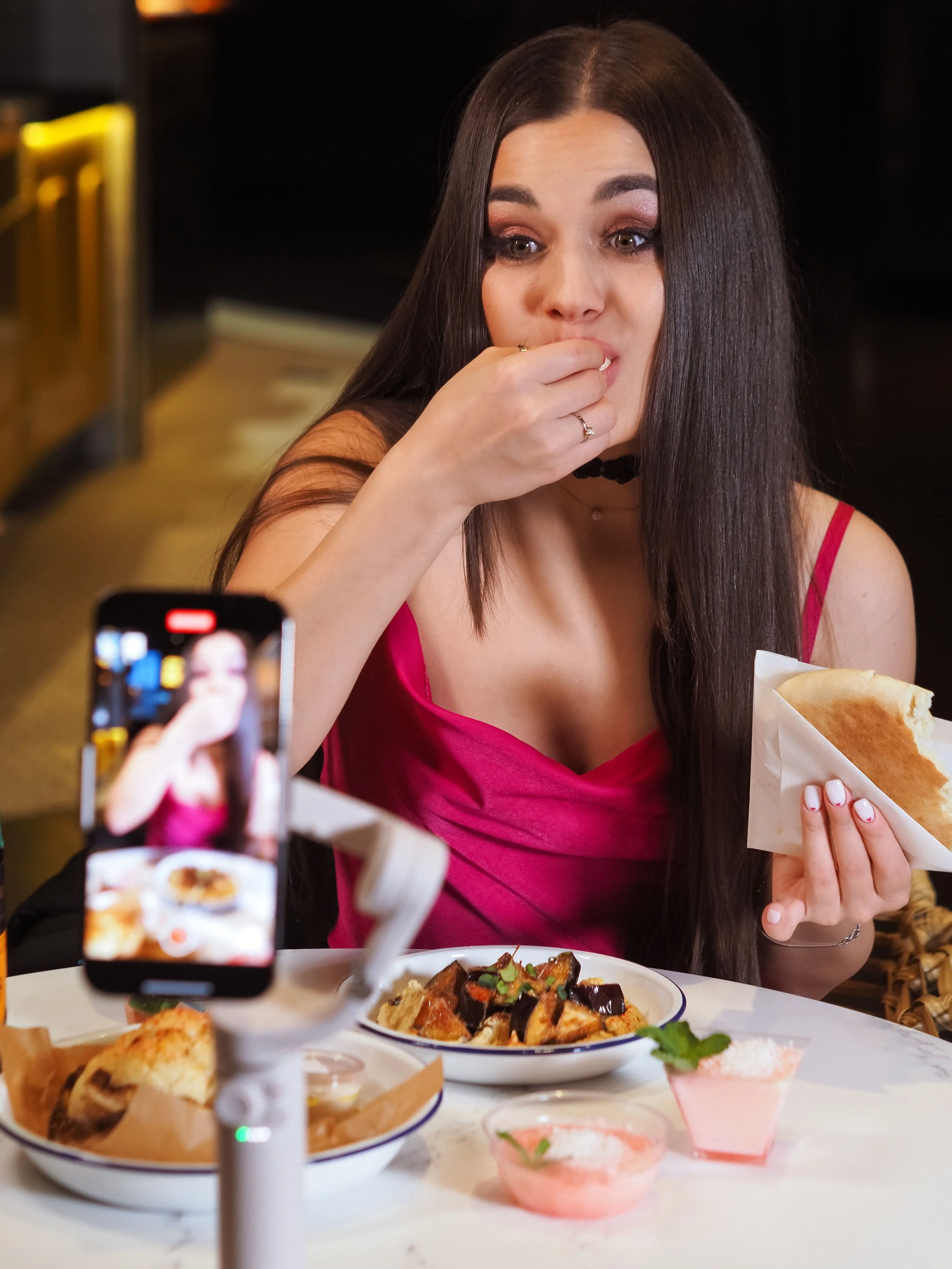
Woman filming herself eating- Pexels.com