
VisionQuest hands one of the biggest MCU successes to Disney
By Iain McLean
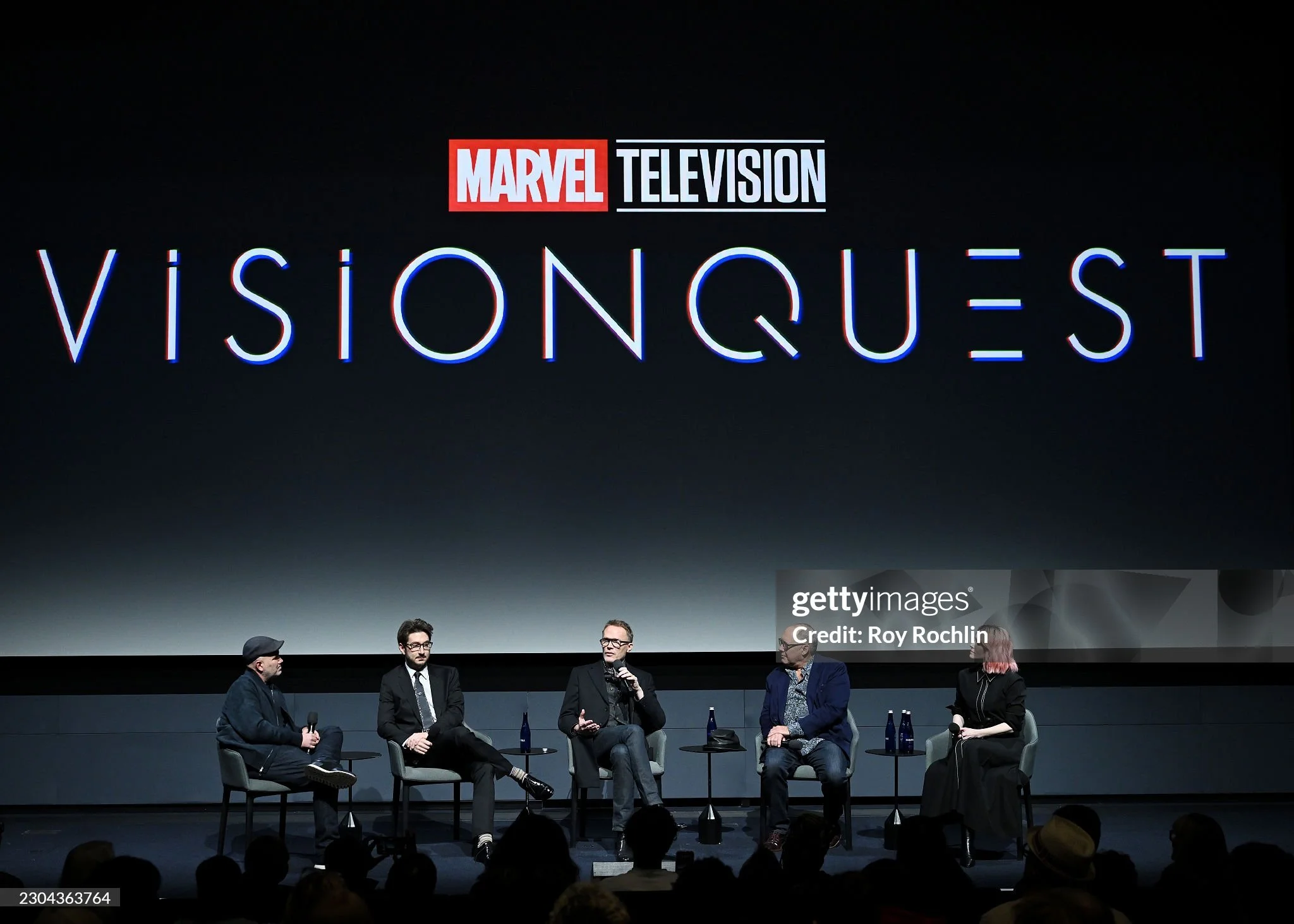
Erik Davis, Terry Matalas, Paul Bettany, James Spader, and Emily Hampshire speak onstage during "VisionQuest" NY Finale Event || image by Roy Rochlin via Getty Images
The final instalment of the Maximoff family trilogy of series has arrived.
It began with WandaVision in 2021, continued with Agatha All Along in 2024, and now culminates with this grand finale, VisionQuest.
Paul Bettany reprises his role as The Vision, the synthezoid Tony Stark created in Avengers: Age of Ultron, alongside James Spader, who also reprises his role as everyone’s favourite genocidal robot, Ultron.
Joining these already iconic characters are Scottish actor Ruaridh Mollica as Tommy Maximoff, one of The Vision's children from WandaVision; Emily Hampshire as EDITH, the AI created for Tom Holland’s Spider-Man; Orla Brady as FRIDAY, Todd Stashwick as Paladin, Lauren Morais as Lisa Molinari and T’nia Millar as Jocasta.
While this may seem like an overcrowded cast, the inclusion of other Stark AIs is essential as they each have a distinct, important purpose in the story, both in helping The Vision come to terms with himself but also with each of them discovering who they are in a world without Tony Stark.
Like its predecessors, the show steers away from massive, trope-filled MCU battle sequences and instead makes the characters and their struggles the centrepiece of the narrative.
VisionQuest may raise the bar with this brave choice by creator Jac Schaeffer. Instead of a rock-em-sock-em robot smash-up, the main plot dives into each AI's core beliefs and existence as a separate entity. This is even the main struggle for Ultron, who strives for companionship.
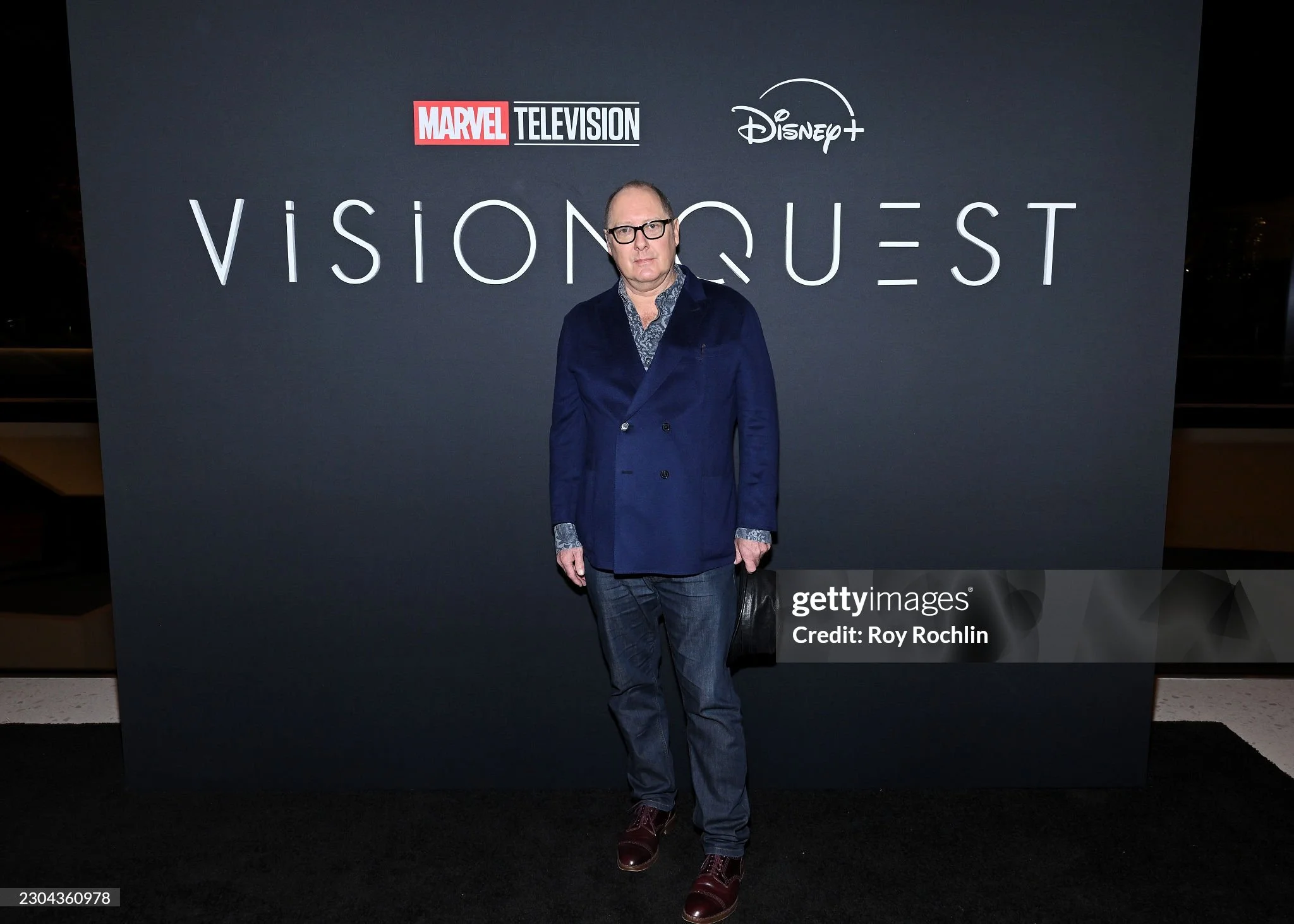
James Spader attends "VisionQuest" NY Finale Event || image by Roy Rochlin via Getty Images
Spader is the highlight of the show, just like in Avengers: Age of Ultron, even lending a physical performance as the vibranium villain, as each of the AIs has human avatars, which Spader takes full advantage of, stealing every scene he’s in.
This doesn’t mean that Bettany’s performance is below Spader's, however.
After his memories are restored in 2021’s WandaVision, The Vision struggles with who he really is and returns to Edinburgh, a favourite hideaway for him and Wanda during Avengers: Infinity War.
Now that his memory is restored, his main struggle is whether he is still the government-made weapon or the red, gold and green superhero resurrected once more, with Bettany delivering one of the show's best performances in its seventh episode.
This is where the show sets a new bar for MCU projects: the philosophical debate over whether AI can be called human takes centre stage when Tommy re-enters The Vision’s life, and the synthezoid reckons with the thought of being both a man-made machine and a father.
Tommy, played excellently by Mollica, searches for his father after the events of 2024’s Agatha All Along, who lands in central London, is kidnapped and is forced to discover who he really is.
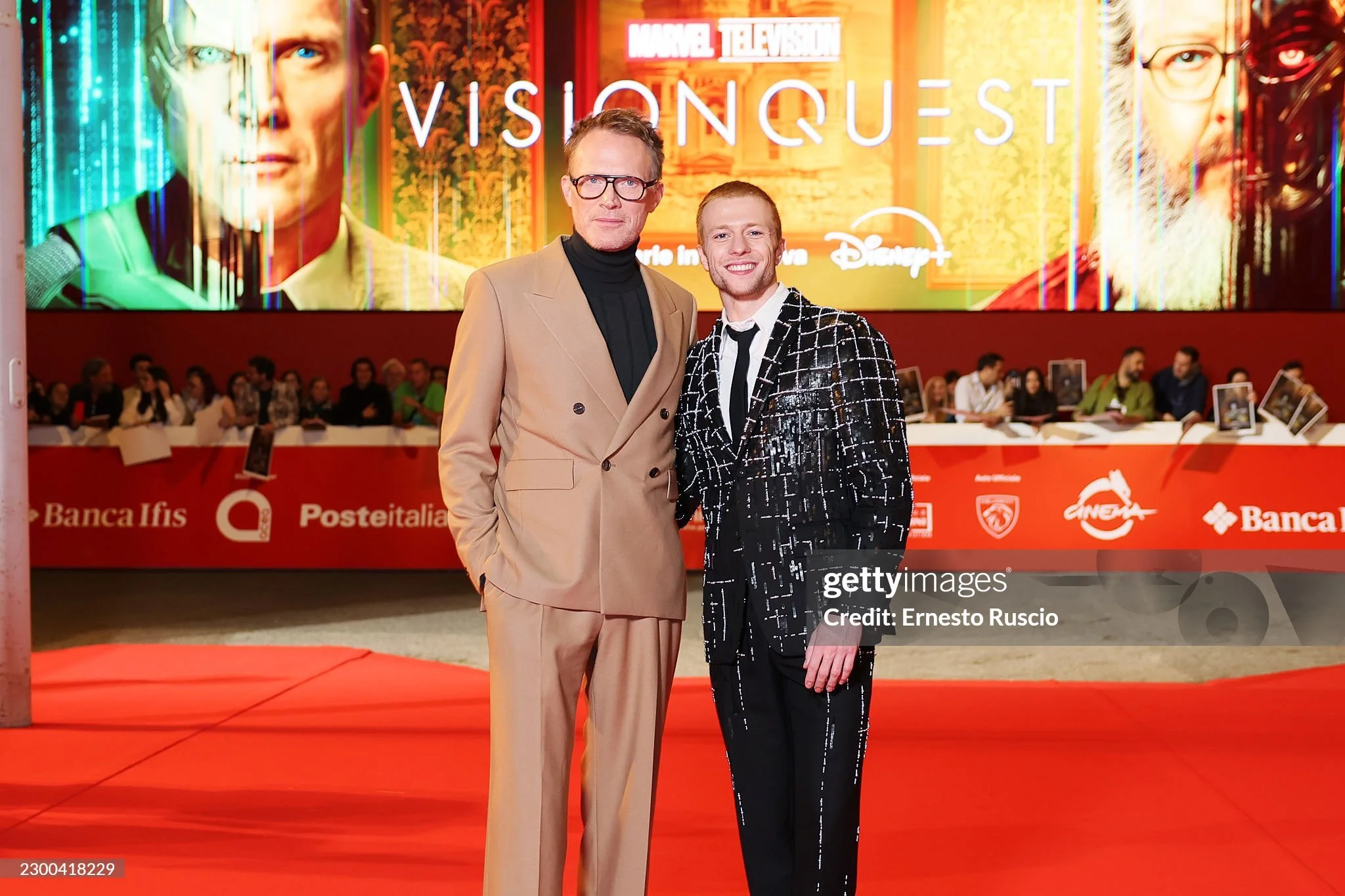
Ruaridh Mollica and Paul Bettany attend the "Visionquest" red carpet during the 21st Rome Film Festival
The consequences of Billy's spell in Agatha All Along have sent Tommy spiralling, leading him to take on a life of crime alongside Laura Molinari.
Mollica plays this identity crisis to a tee. The constant struggle of dealing with the consequences of Billy’s spell and who he really was constantly clashes, making him also embark on a journey of discovery, just like his father.
Another key character is Jocasta, but let’s avoid too many spoilers; her struggle is that of a being fuelled solely by revenge for her circumstances, which leads her to find common ground with Ultron, which effortlessly, surprisingly and beautifully humanises both as the series develops.
This is how Schaeffer makes this series one of Disney’s treasures, it will surely take its place among the best MCU shows so far. The heavily personal direction taking centre stage, paired with the outstanding set design for The Vision’s mindscape and a key finale sequence, ties it back to WandaVision in terms of set pieces and visuals.
So, does this effectively close out the Maximoff family trilogy? The answer is a solid yes.
Nothing is forgotten. There are no hanging loose threads or no plot holes. Everything is tied up nicely and sets up the future of the MCU heading into Doomsday, and it’s not just me who thinks so. The finale of the series is currently on par with critic reviews of Loki across Rotten Tomatoes and IMDb, making it one of the highest-rated MCU show finales ever.
VisionQuest also added another trophy under the cape, one of the most-watched finales with 3.7 million views on its release day, according to The Walt Disney Company.
With successes like this, audiences have shown Marvel doesn’t have to keep delivering large-scale CGI battles mixed with toilet humour, like in Thor: Love and Thunder, to chase success. To keep the MCU diverse and the shows alive, they have to learn from the Schaeffer trilogy's success and weave it into future phases.
There is far more room for experiences like the Schaeffer trilogy, which revolve around more personal, intricate stories and aren’t afraid to dive into deep discussions about identity, flaws, or even philosophically challenging themes.