
Scotland’s growing space sector: An opportunity or curse?
By Logan Smith

AAC Clyde logo
Scotland's technology and research sectors have expanded rapidly, outpacing the national economy and creating thousands of new jobs.
One of the newest and fastest-developing sectors in Scotland’s technology and research industry is the burgeoning space industry, which is quickly becoming one of the biggest in Europe.
Scotland is developing five of the seven planned spaceports in the UK, with sites in Shetland already hosting up to 30 rocket launches a year.
Glasgow already builds more small satellites than any other European country, driven primarily by extensive Government funding and the establishment of companies like AAC Clyde Space.
Major rocket launches by the European Space Agency (ESA) are conducted at the Guiana Space Centre in French Guiana, across the ocean in South America.
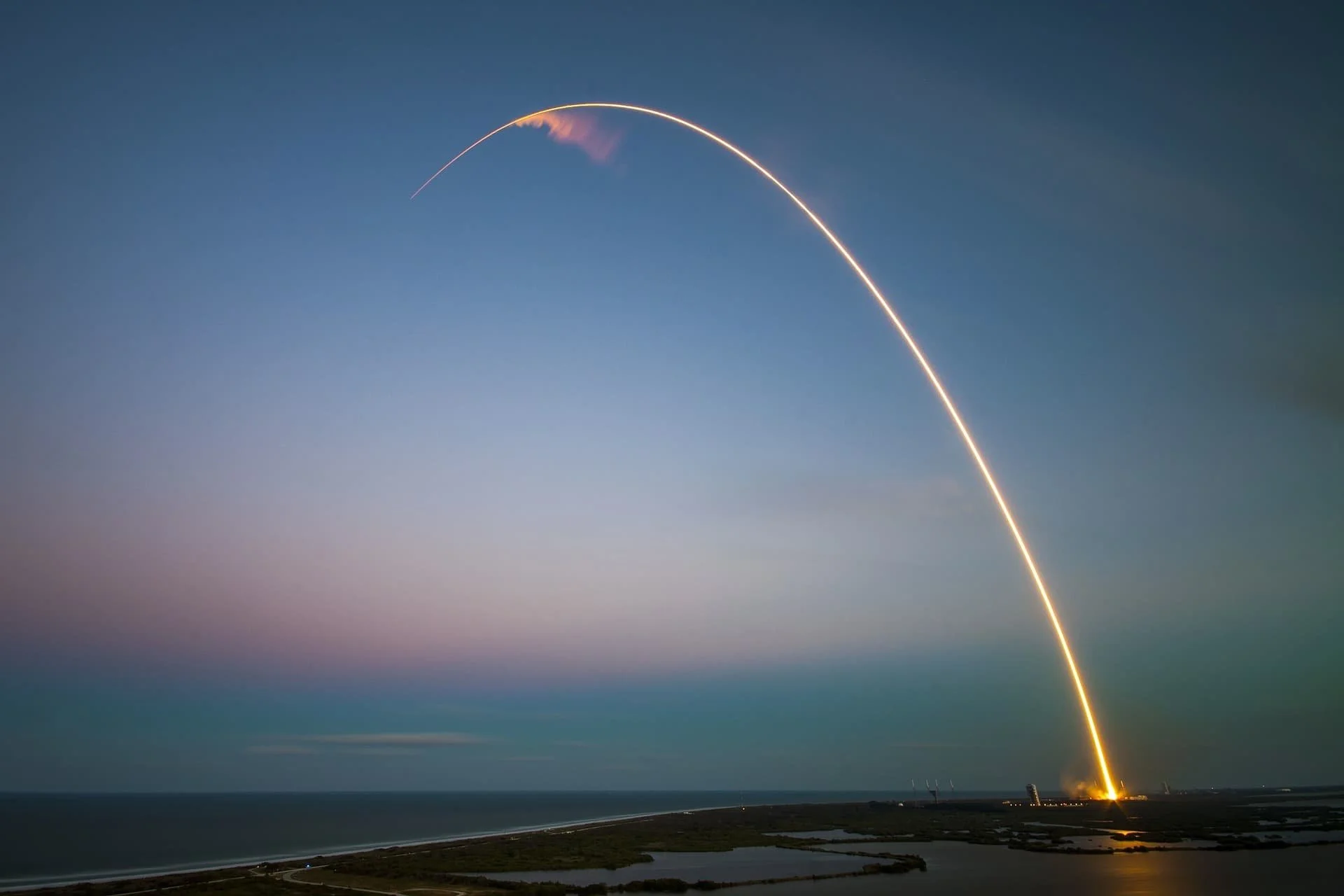
rocket launch || image via Unsplash
The operational costs of shipping heavy rockets, their parts, and the required fuel across the Atlantic are substantial, and maintaining the space centre costs hundreds of millions of Euros every year.
Because of this, some analysts predict Scotland could become the go-to location for European rocket launches; this would be a significant opportunity for Scotland, bringing in vast amounts of foreign investment and making Scotland a serious leader in space travel.
Laura Edison is a lawyer who has worked with several of Glasgow’s rocket businesses. Speaking to the Law Society of Scotland, she said:
“The space industry in Scotland is still small when compared to the States, but once it grows beyond the research-and-development stage into commercialisation, we’re going to see even more opportunities.”
The space industry will play a significant role in Scotland’s future economy, with spaceports becoming more common in the Highlands and Islands.
Development increases yearly, yet the national media rarely discusses Scotland’s growing space sector. It seems likely that once local concerns and objections begin to grow, the national media will take more interest.
Environmental groups have already begun to raise significant concerns, focusing on habitat destruction and peatland disturbance, especially in such rural areas.
Scotland is already a bit of an oddity in Europe; it is used to store the United Kingdom’s nuclear weapons and is now becoming one of the only places on the continent to launch a rocket.
For many, this is just another example of Scotland’s natural habitats suffering unnecessarily for the benefit of other countries; after all, a single small satellite launch releases gas, black carbon, and particles into the atmosphere.
Scotland has an interesting and unique opportunity here; if used right, we could see a new age of European space travel, with Scotland right at the heart.