
Should we care about the Budget?
By Aiden McKeown
The Budget has had a history in recent years of being a crucial moment for the Government where they must prove themselves to the people. A key example of this came in 2022 when shortly following negative reception towards Liz Truss’ Mini-Budget, she resigned from office.
A consistent trait across the annual budgets is that they are wide-reaching; what this ensures is that public opinion is divided between those who can benefit from the changes and those who are negatively impacted by it.
Anne Smith, from Newton-Mearns said: “I didn’t think it helped anybody really. As with everything, costs will go up.
“I thought it was quite bland. I didn’t think there was much to it.”
While the general reception to the budget remains to be seen, the headlines today concur with the sentiment that the budget did not mark a major moment for Labour, like we have come to expect from the budget.
However, it cannot be said that this was a budget without decisions that will have ramifications. The Government allocated a £100 energy payment to households in council tax bands A-D that will be paid directly into their bank accounts.
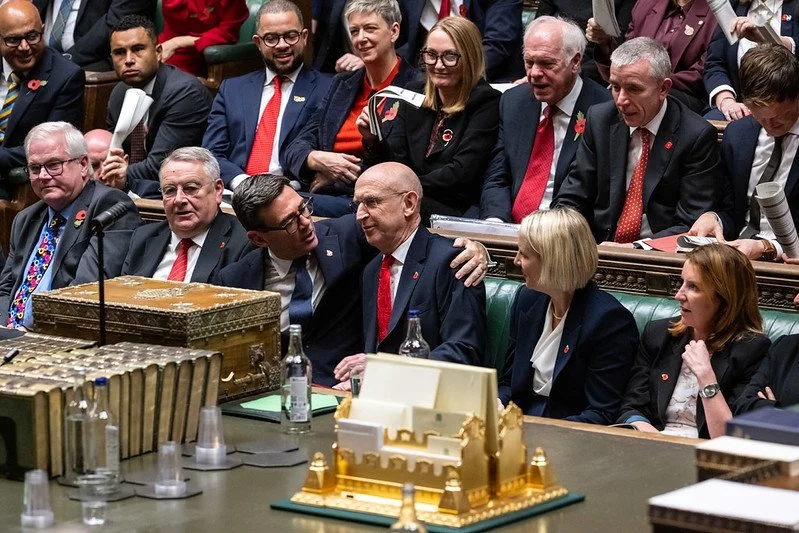
Andy Burnham embraces John Healey after he delivers the Budget. (Credit: UK Parliament)
They will also give the same funding to the devolved governments with the intention that they do the same. Deputy First Minister Jenny Gilruth has said that the Scottish Government will aim to replicate the scheme.
Another measure that the Government has introduced is a Pension Tax Allowance that will prevent poorer pensioners who earn over the income tax threshold from having to pay that tax.
The war in Ukraine also continues to be a factor in spending with the Government pledging £10 billion in economic and military spending to aid Ukraine. Healey re-affirmed that Britain will be behind Ukraine for “as long as it takes."
Despite these major commitments, it cannot be said that awareness of the policies in the budget is as wide reaching as its impact.
John Canning, from the Gorbals, said: “I don’t do politics. I don’t know how this will affect me.”
This apathy towards the budget is indicative of a lack of awareness from the public towards the policies of the major parties. This trend can be seen most prominently in voter turnout.
We’ve seen that the 2024 General Election voter share (59.7%) was reduced in comparison to the General Election in 2019 (67.3%). It stands to reason that with this sharp decline in turnout that the public would not be as aware of the measures that this government implements.
This is one of the first major challenges for Andy Burnham’s Government, and it remains to be seen what place the 2026 budget will have in the legacy of its term. With the Government’s 10-year plan coming soon, the decisions that will define his premiership are close at hand.